The published arrival is an intermediate point
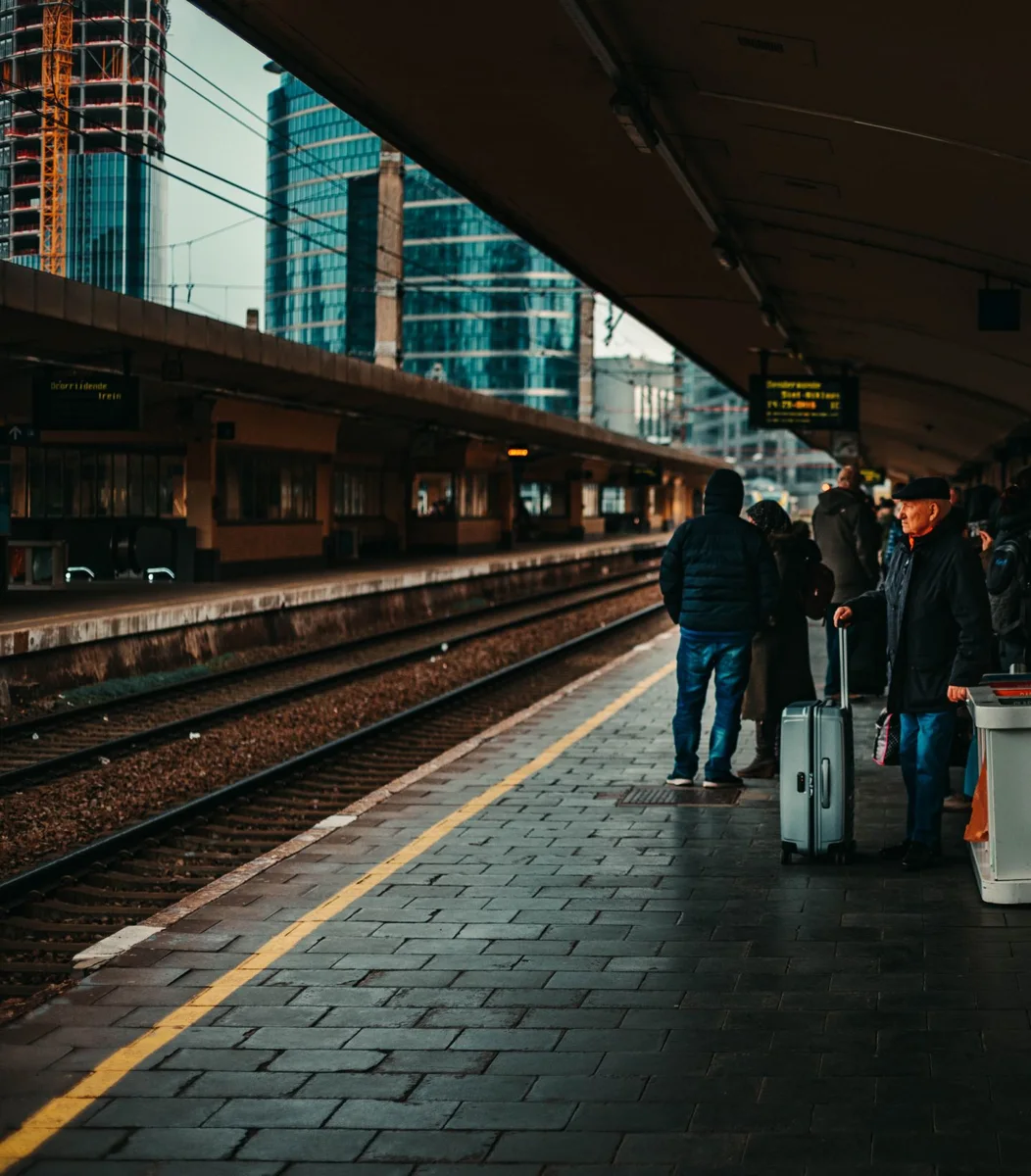
A train reaches the station, but that does not place you inside the museum or hotel. Draw the actual chain from platform to destination. It may involve orientation, storing bags, another connection and walking from the stop to the entrance. Writing the published arrival beside an exhibition start skips these tasks rather than completing the plan.
Two travellers do not automatically create large delays, but they bring different needs. One may first want food while the other needs a toilet. Include ordinary steps within arrival instead of treating them as unexpected interference with an apparently finished connection. The real journey includes people as well as vehicles.
Consider uncertainty at each transition
A familiar route without bags is easier to assess than an unknown station followed by a search for storage. Name uncertain sections. Recognising an unresolved luggage arrangement is more useful than adding the same small allowance everywhere. Check the actual facility and its conditions rather than relying on a general storage symbol.
DB's journey planner permits adjusting transfer time. That can help when more time is needed between services. It does not automatically resolve the subsequent journey from the destination station to a museum's entrance. Transport information and local arrival remain different planning stages, even where they appear within the same day.
With particular mobility needs, the exact transition matters. A general description of the station or property does not replace information about the chosen route. Ask about specific assistance or access and adapt the plan accordingly. Avoid creating apparent certainty through untested standard assumptions. What works for one section need not describe the entire journey.
Work through an afternoon admission
Imagine arriving with bags before a later exhibition. The critical question extends beyond whether the train might be on time. You also need a resolved bag arrangement and the correct exhibition entrance. Choose an adjustable street section beforehand rather than another fixed appointment. This places flexibility where the uncertainty actually occurs.
If arrival takes longer, omit the optional loop while keeping the main visit intelligibly reachable. If everything works smoothly, use the time for the street or a pause. The margin has not been wasted; it creates an enjoyable option instead of merely rescuing a frantic sequence. Extra time can have value without becoming another booked attraction.
Do not convert every favourable connection immediately into another programme item. A plan becomes fragile when each open interval invites the next reservation. Give the margin a clear purpose: completing the important transition even if an ordinary step takes longer. Both people should understand what can be removed before another stop is added.
Plan the departure day backwards
Begin with the selected departure and work backwards: reach transport, collect bags and leave the final place. An appealing endpoint far from the accommodation may create another journey overlooked on the original city map. Check it before beginning the final circuit. The journey back for bags is not already included simply because you passed the hotel earlier.
Choose an ending that can finish earlier without substantial loss. An open pause or short square visit is easier than an event ending just before departure. If a late programme is the actual reason for travel, another return arrangement or overnight stay may be the more realistic structure. Margin cannot make two incompatible fixed appointments compatible. It should support a workable chain rather than conceal a conflict already visible in the timetable.
Sources & current information
Opening hours, connections and conditions can change. Consult official sources before travelling and follow local notices.