Socks are part of the fit
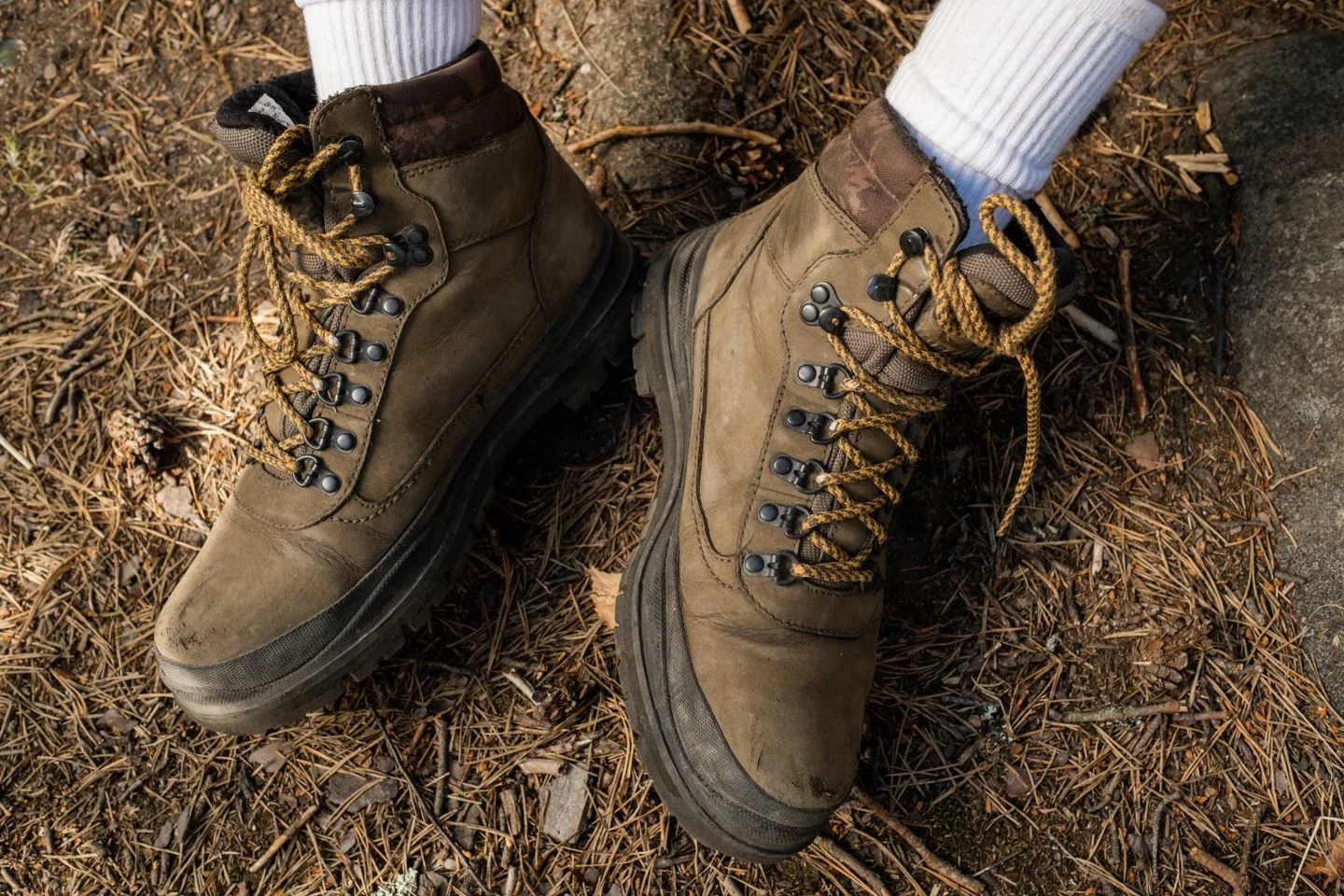
A shoe that feels comfortable with a thin everyday sock does not necessarily fit equally well with a thick walking sock. Extra padding occupies space. Try the combination you intend to wear and assess both feet. A sock does not become more suitable simply because its packaging names a more demanding activity.
Smooth it into position before putting the shoe on, aligning the heel and any left-right markings. If the shaped heel extends beyond your own heel area, examine the size range or another cut. Correct shoe length does not automatically compensate for a poorly positioned sock.
Locate the extra thickness
Padding is often distributed unevenly, with additional material at the sole, toes, or heel. FALKE's TK range, for example, distinguishes different cushioning levels. That describes product construction rather than a universal scale from worse to better. Extra material may feel comfortable in a roomy shoe while changing the available space in a close-fitting pair.
Do more than compare folded socks in your hands. Put on the intended shoe, fasten it normally, and walk a little. Notice whether your toes retain their usual space and whether fabric gathers anywhere. If accommodating a different sock requires an unfamiliar lacing adjustment, reassess the whole combination.
Different thicknesses for two people are entirely reasonable. Shoe volume and personal preferences can differ on the same outing. A shared multipack is useful only when its sizes and construction suit both people.
Assess seams, height, and cuff while wearing them
Turn the sock inside out to see where the toe construction sits. Then judge how it feels inside the shoe, rather than relying solely on a low-seam description. Even a flat finish may occupy precisely the area where your footwear has limited room.
Choose the height around the shoe collar and your preferred feel. A very short sock may disappear beneath the collar; a higher one adds fabric further up the leg. Check the cuff both standing and sitting. An unusually tight sensation is not a necessary quality of a walking sock.
These observations guide selection; they do not promise prevention of discomfort. If a combination feels clearly unpleasant, change it or obtain a professional fitting rather than using an advertising statement as a reason to keep wearing it.
Read the fibre description alongside the care label
Look at the actual composition. A description mentioning merino does not necessarily mean it is the main constituent, and synthetic blends vary substantially. Choose around the specific product and your normal care routine, without deriving broad performance promises from one fibre name.
Follow the purchased pair's label for washing temperature, programme, and drying. General brand advice provides context but cannot override a different model instruction. If you carry a spare pair, keep it dry and assigned to the appropriate footwear combination. Easily distinguishable pairs also simplify sorting after washing when two people have similar equipment.
Sources & current information
Opening hours, connections and conditions can change. Consult official sources before travelling and follow local notices.