Two levels offer different experiences
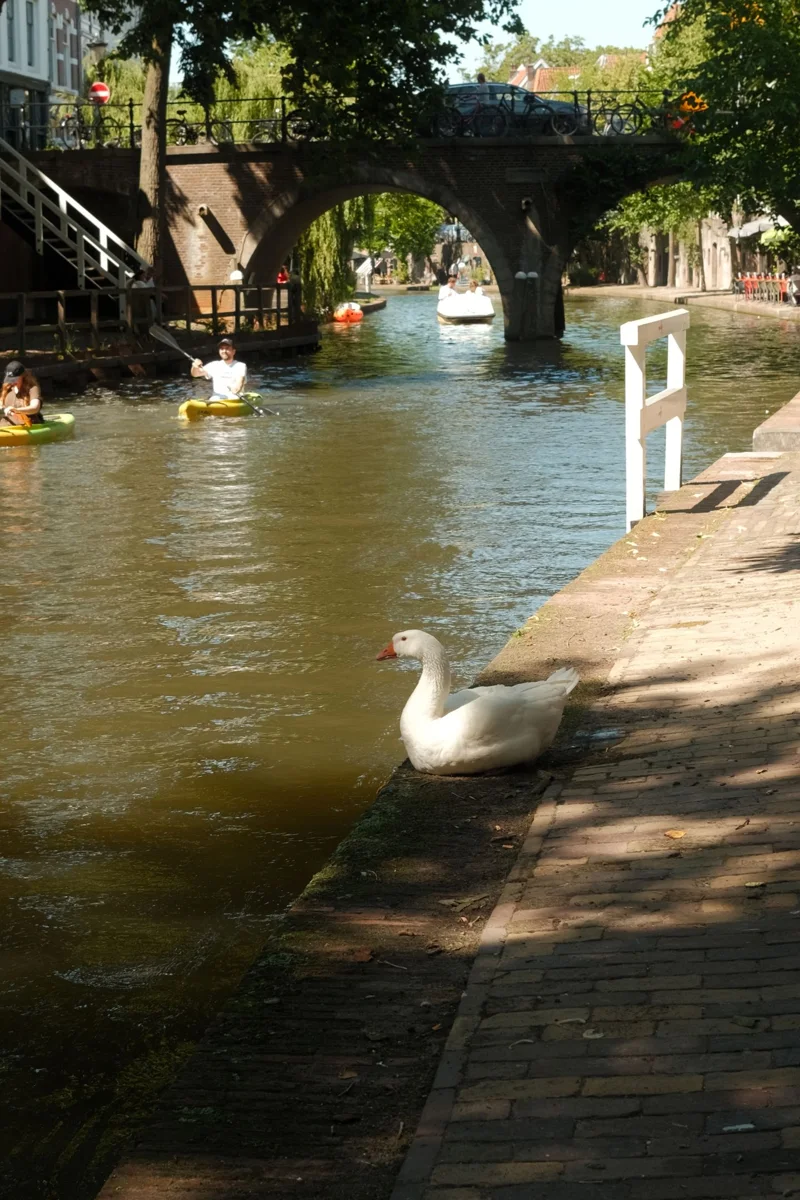
Utrecht can be explored beside a canal and at different heights. Streets and bridges sit above the characteristic wharves and cellars at water level. The tourism office describes these lower areas as former working and storage spaces. Their present uses include hospitality and private premises.
The useful consequence is a route decision rather than a historical date to memorise. At street level you remain closer to cross streets and other destinations. Lower down, the water is more immediate, but access points matter. A map does not establish that every stretch forms an uninterrupted public waterfront path.
Choose a connected section of the Oudegracht. Change level where it serves a planned pause or an actual access point. Repeatedly descending and climbing adds unnecessary effort, particularly with luggage or when one of you wants to avoid stairs. Check specific accessibility information instead of assuming that a short route is automatically easy for everyone.
Keep the second priority small
Ganzenmarkt makes a specific turning point for the canal section. Look at the upper street first, then locate the marked tunnel access at Ganzenmarkt 2. This makes the relationship between street and wharf tangible. If you intend to stop at a waterside venue afterwards, check its actual entrance. An Oudegracht address does not by itself identify the level where you should approach.
The official city information identifies the Ganzenmarkt tunnel as an old route to the wharves and a stop in Utrecht Lumen. It provides a specific small detour rather than an obligation to complete an entire evening light route. Verify current information if a particular installation is central to your plans.
In rain, an exclusively waterside day is less appealing than a mixture of shorter outdoor sections and a considered indoor break. Choose that break in the same part of town. A long transfer across the city removes the geographical advantage created by keeping the route compact.
For two people with different walking appetites, agree an endpoint rather than an exact pace. One person may spend longer looking at a bridge while the other prefers sitting by the water. A nearby meeting point is more workable than requiring every pause to be shared at exactly the same moment.
Arrival and the final walk
Check the actual station-to-accommodation route, not simply the distance to the Oudegracht. With bags, bridges and the correct entrance can matter more than a small rate difference. Where agreed, leave luggage before exploring the lower waterside areas.
On departure day, a short final canal walk works better than another visit with an uncertain finishing time. Identify the route back to the station beforehand and include luggage collection. That preserves Utrecht as a stay with waterside pauses rather than ending it with a hurried dash through shopping streets.
Sources & current information
Opening hours, connections and conditions can change. Consult official sources before travelling and follow local notices.