Measure the luggage before choosing a set
A set containing several packing cubes is not yet a suitable system for your travel bag. Measure the usable interior, accounting for curves, handle channels, or sloping sides. Compare that area with the filled organisers' outer dimensions. A cube lying flat when empty may become substantially taller and rounder at the sides once packed.
For a soft travel bag, consider the opening too. A large cube might be removable only after everything above it comes out. Two smaller ones may be more flexible but add extra zips and fabric. The useful question is not which set contains most pieces, but which units you can reach inside the intended bag.
First gather the normal weekend clothing without organisers. If you are taking only a few items, two simple pouches may already address the task. Packing cubes should solve an identifiable organisation problem rather than make additional compartments appear reassuringly full.
Separate by person or by use?
One approach assigns each person a clothing cube. This helps when you want independent access at the destination. Distinct colours or clear markings are more useful here than two outwardly identical containers. Both people should know which unit belongs to whom.
Another arrangement groups by timing: first-evening clothing in a smaller organiser, later items deeper in the bag. This can simplify a late arrival but mixes personal belongings. Deliberately choose one understandable main logic. If each object follows a different rule, the shared bag remains confusing despite the extra compartments.
For example, one overnight stay may need only two personal cubes and a known shared position for other small items. A weekend involving several clothing changes may benefit from an area for already worn garments. This is not a suggestion to add speculative outfits; it describes how the contents change state during the journey.
Compression does not remove the contents
Compression cubes include an additional arrangement for closing a filled organiser more tightly. Eagle Creek distinguishes these products from ordinary cubes, garment folders, and pouches in its guide. That helps identify construction types without establishing a fixed space saving in your luggage.
The bundle's volume may change, but the clothing's weight does not disappear. Check whether the packed shared bag remains comfortable to carry. Newly available space should not automatically be filled with extra objects.
Access and repacking matter with a compressed cube. If retrieving one top requires opening a tightly packed block, that design may suit infrequently needed reserve clothing better than everyday items. Try the closure as instructed with your typical contents, without forcing fabric between the zip teeth.
Examine visibility and opening direction
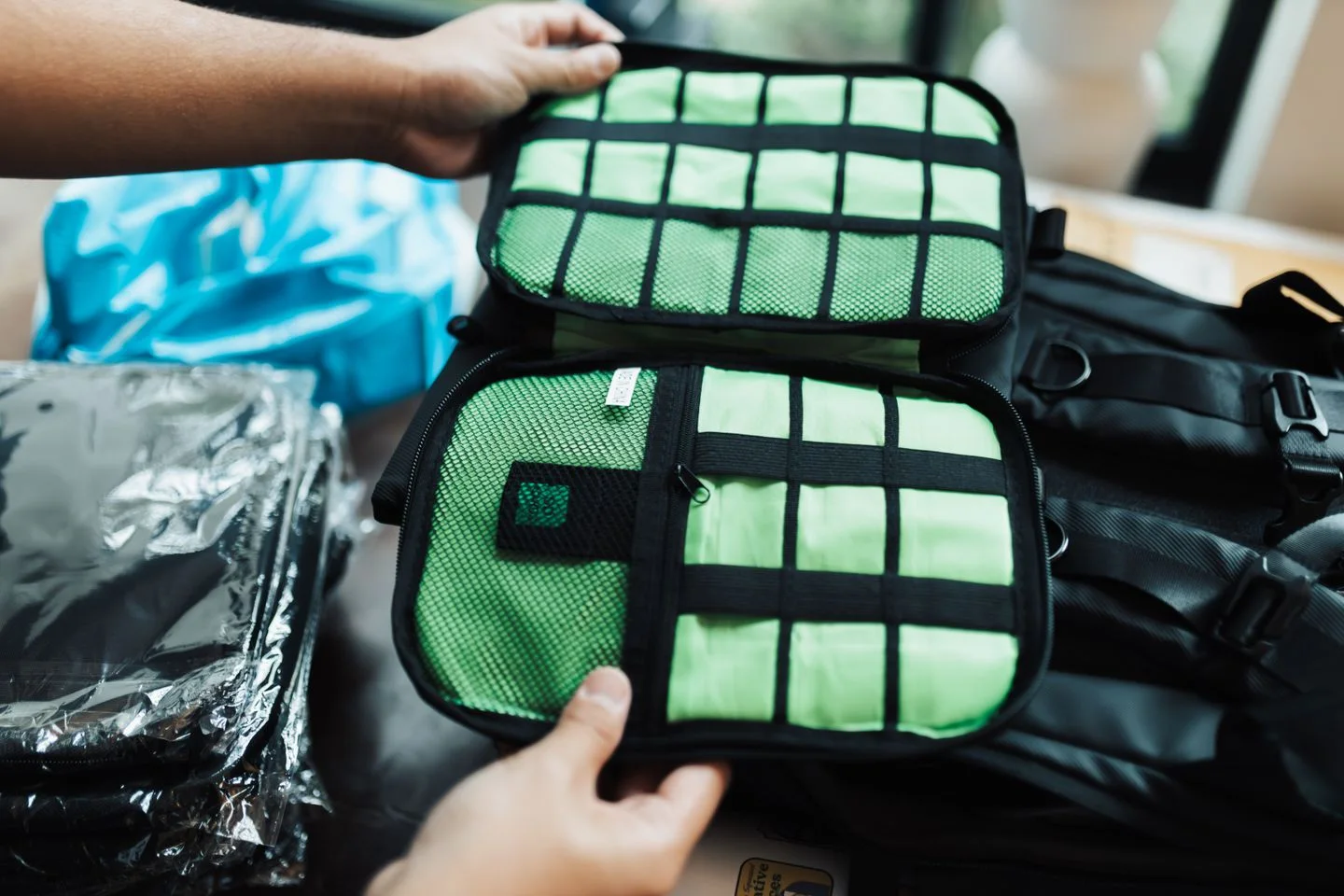
A mesh window reveals some contents, while a closed surface conceals more from outside. Which helps depends on your labels and packing routine. Visibility is not automatically adequate ventilation for damp clothing, and a closed fabric surface is not automatically waterproof. Read the specific product claims for those properties.
Check how far the main opening extends. A cube that opens widely can function like a small drawer in the room, but it needs enough space to unfold. Narrow top access contains more of the bundle while making deeply packed pieces harder to see.
Look for zip pulls you can grasp when the organiser sits tightly between other belongings. Small soft pulls may save weight yet feel awkward in your hands. A carrying handle particularly earns its place if you regularly lift the entire cube out of the luggage.
Account for the return journey
A separate area can simplify sorting dry worn clothing. Damp items need treatment appropriate to the circumstances and materials, followed by drying. An ordinary cube does not promise that they can remain closed inside it. Even specialised divided compartments have particular limits.
After travelling, empty, clean, and dry the organisers according to their instructions. Retain the pieces whose contents and position both people can find without explanation. That is a more meaningful measure than the number of cubes lined up neatly in a product photograph.
Sources & current information
Opening hours, connections and conditions can change. Consult official sources before travelling and follow local notices.