Decide what the night should provide
Begin with a shared expectation rather than the cheapest displayed category. Do you mainly want to lie down, have a private compartment, or travel overnight at a lower fare? A seat, couchette, and bed answer those wishes differently. Two places booked together do not automatically create a private room.
Nightjet distinguishes seating, couchette, sleeper, and additional categories on newer vehicles. Read the description for the actual service. Its official information notes that other EuroNight services and operators can differ. An attractive carriage photograph does not explain every overnight train.
Name two requirements, such as both lying down and not sharing with other passengers. Compare the available products afterwards. If only one requirement is met, the compromise is visible before boarding rather than discovered inside.
A seat is not a cheaper version of the same bed
Seating may suit travellers prioritising fare over a horizontal night. It should not be selected with the same expectation as a bed. Facing your companion does not create a sleeping berth. Consider what the following day can accommodate after a potentially unsettled night.
On a short weekend, arrival quality may matter particularly. A demanding walk or lengthy morning appointment can compete with the apparent saving on the overnight fare. This is a personal trade-off rather than a prediction of how well either person will sleep.
Check the return independently. Another vehicle can offer a different layout. Read each confirmation and verify date and category. A shared product family in the booking menu does not establish identical equipment.
Shared berths or a private space?
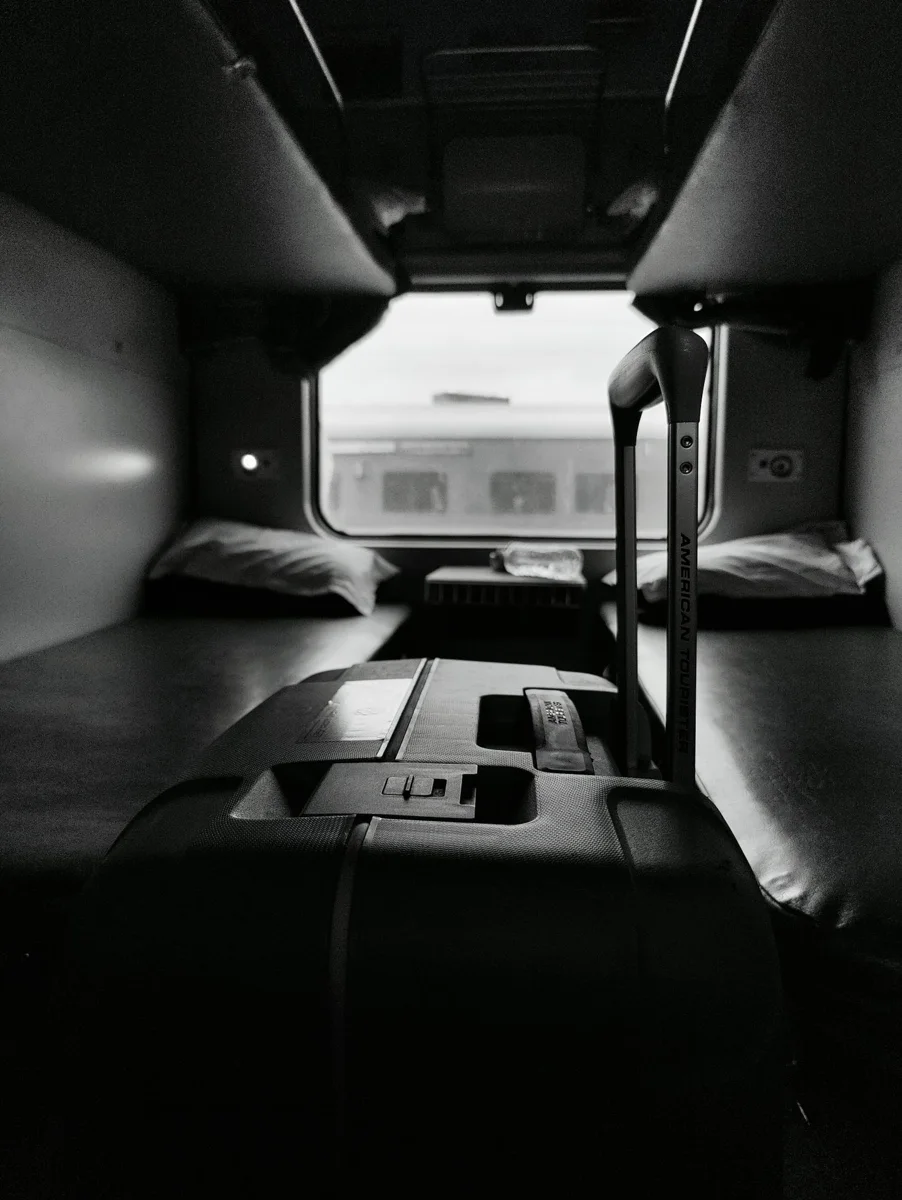
Occupancy matters in a couchette. Two purchased berths may belong to a compartment shared with others. To remain alone, choose and confirm a product actually sold as private. A request field is not a private-compartment booking.
Ask about berth position where climbing would be difficult. An upper sleeping place does not suit everyone. An appropriate category and confirmed place matter more than assuming another passenger will swap.
For a sleeper, read actual occupancy and included facilities. A private compartment may suit an evening together but does not mean every vehicle contains an en-suite bathroom or the same layout. Use the description of the booked product.
Nightjet describes newer Mini Cabins as individual sleeping spaces with a small connection between adjacent cabins. They remain two individual areas rather than one large shared bed. If adjacency is essential, check actual allocation. A general connecting possibility does not automatically reserve a suitable pair.
Carry the choice through to boarding
Establish where bags go in the selected carriage and whether essentials remain accessible overnight. Two large cases can affect a small compartment even where carriage is permitted. Keep documents and personal items reachable without repeatedly opening everything.
Record carriage, places, and any private category for both travellers. Use the current formation at boarding. If the supplied vehicle differs, ask staff and document the difference factually. Do not occupy another compartment as an assumed substitute.
Plan the arrival morning around alighting, orientation, bags, and accommodation access. The chosen sleeping category may influence that morning but does not arrange early room access. A useful night-train decision connects sleeping preferences, occupancy, and the next actual task.
Avoid placing a prepaid early activity so close to arrival that any variation creates immediate pressure. Sleeping accommodation and punctual arrival are separate matters, even when both are represented in one attractive journey description.
Sources & current information
Opening hours, connections and conditions can change. Consult official sources before travelling and follow local notices.