Identify the replacement leg
Before departure, read every section rather than only arrival and total duration. A leg may be marked as replacement transport. Train number and platform then do not identify boarding. Save the stop, location plan, and information applicable to your date.
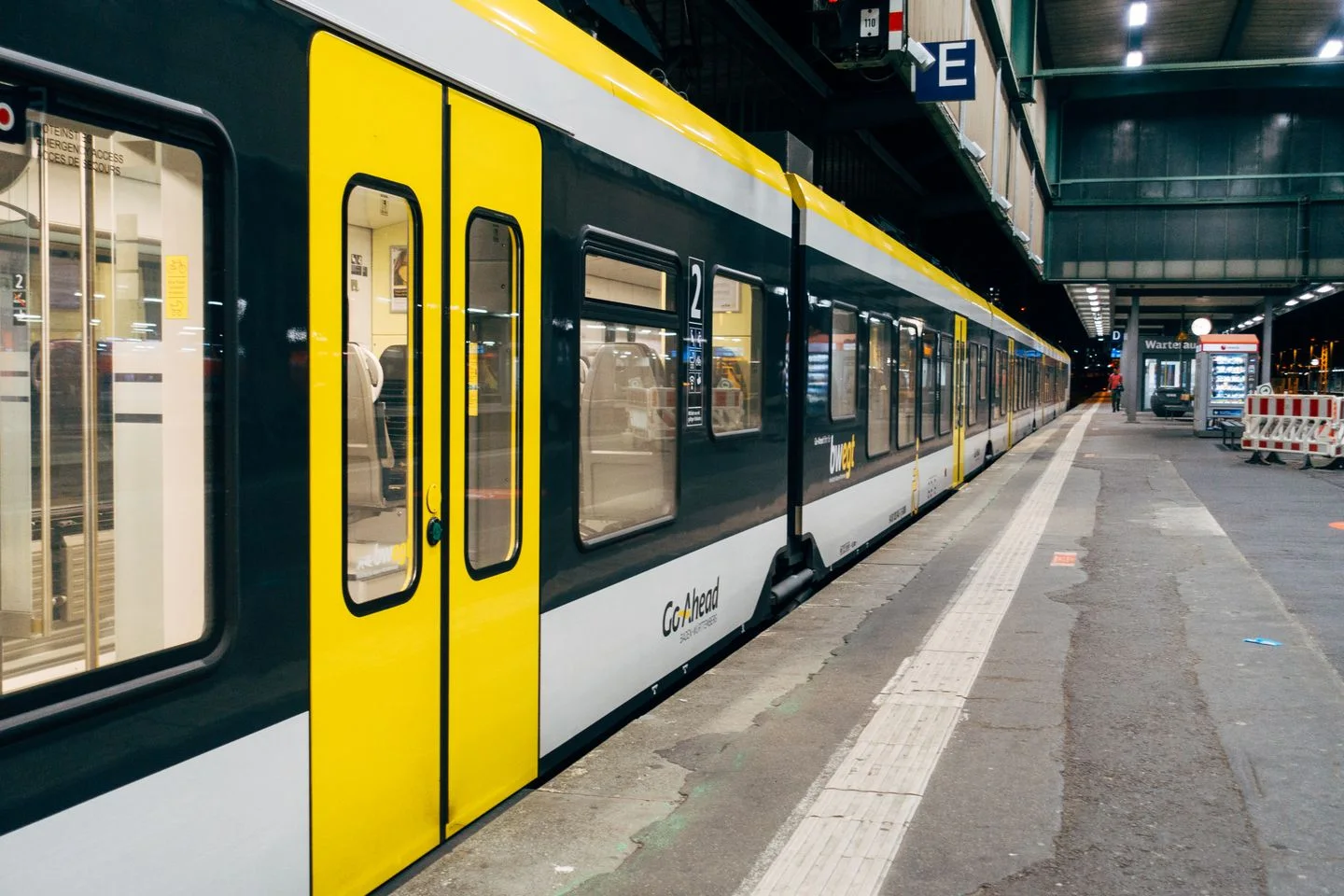
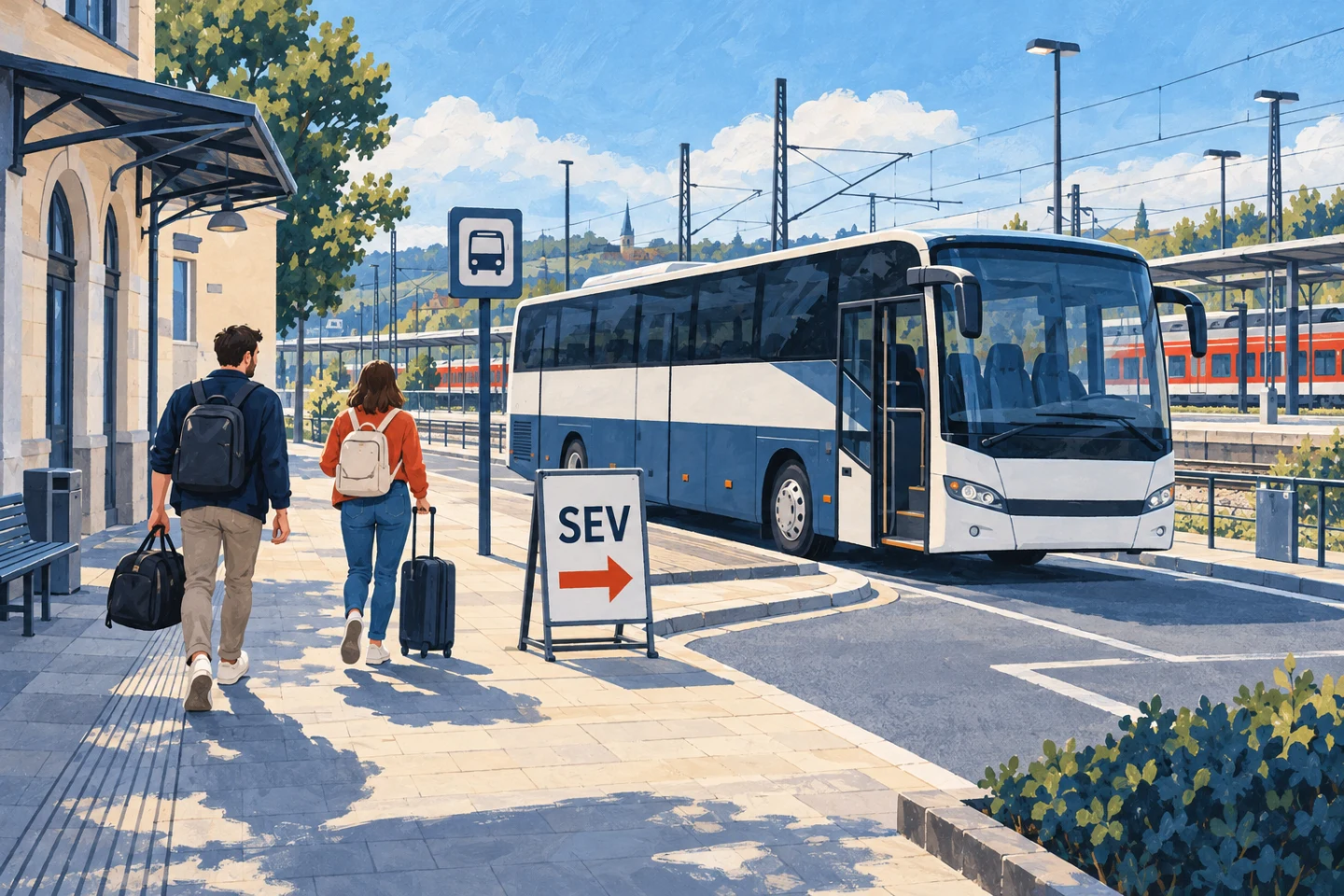
DB Regio Baden-Württemberg, for example, publishes replacement-stop overviews and directs passengers to station surroundings plans. This regional example explains why the ordinary station pin is insufficient. The bus may depart outside the building or on another street.
Check whether each end of the bus leg means exactly the same location as the train stop. Walking to a replacement stop belongs to the change. Do not treat the whole interchange interval as platform time when you must leave the station.
Wait at the correct side of the street
Read direction and destination at the actual stop. Similar stop names may serve different directions. Use the official location plan and current signs. A bus near the station is not the correct replacement solely through its appearance.
One person can check information while the other remains with the bags. Both should then understand the direction. Do not board separately without establishing that you are using the same service.
If the stop cannot be found, ask the responsible information service about the actual replacement. General navigation may not know a temporary relocation. Keep the official change notice so your enquiry refers to the correct journey.
Check luggage and special carriage
Buses handle bags differently from trains. Read the replacement information for large cases, bicycles, or other special items. Cycle carriage on the original train does not guarantee corresponding bus space.
Two cases need time for alighting, orientation, and possible loading. Do not omit a bag from the interchange process simply because it would otherwise remain beside you on the train. Follow staff instructions when loading.
For particular mobility requirements, establish the specific arrangement beforehand. Replacement transport alone does not answer questions about vehicle access, storage, or assistance. Ask about the service actually provided instead of inferring it from a familiar bus shape.
If an unsuitable replacement means the original itinerary no longer works for you, ask the operator about available alternatives before making a new booking. Keep the operational question distinct from a later reimbursement assessment.
Recheck what follows
Review the complete connection, not only replacement running time. Road conditions, the walking route, and a different arrival side may alter the sequence. Do not add an unexamined tight final connection after the bus.
Ticket validity also requires clarification through the responsible operator. A local bus heading in the same direction is not automatically the replacement or valid with the same ticket.
If the change emerges en route, preserve the new information and advise accommodation or another provider where relevant. The bus is then a real new leg to understand through boarding, luggage, and onward travel rather than a minor detail in the itinerary.
Sources & current information
Opening hours, connections and conditions can change. Consult official sources before travelling and follow local notices.