Empty the bag completely first
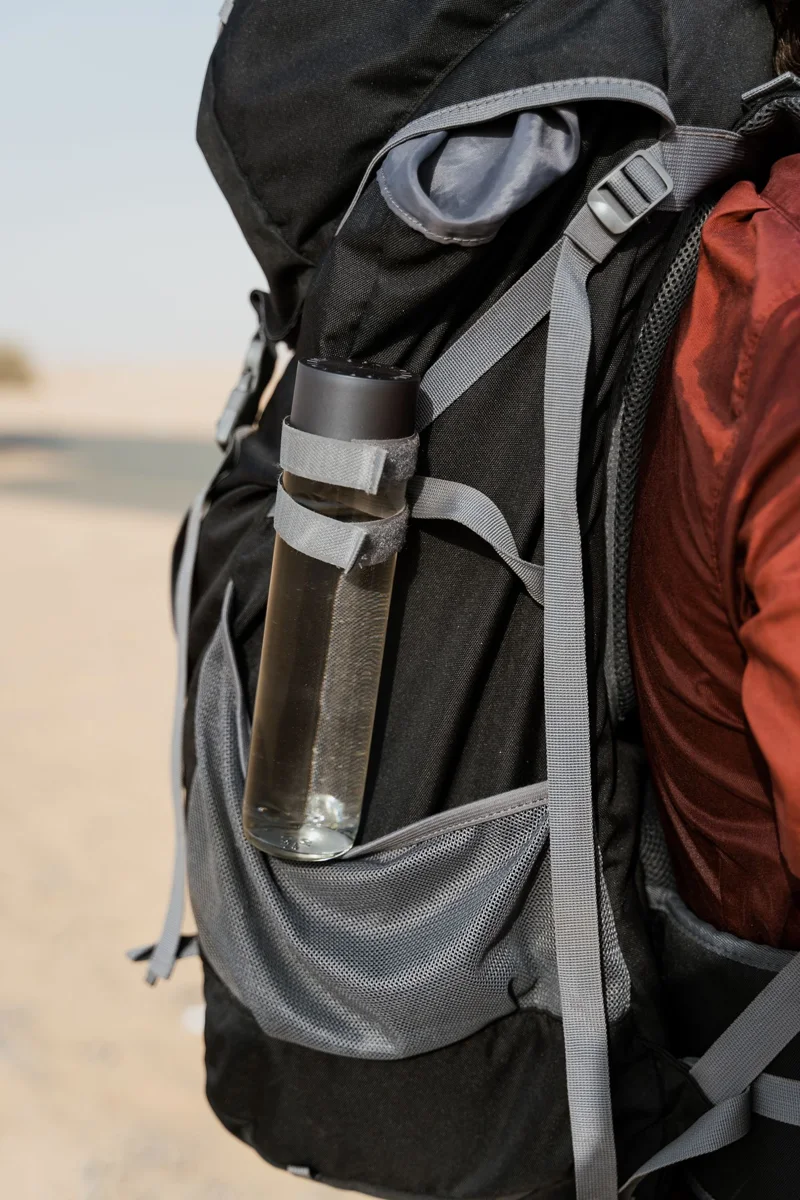
Do not simply put the packed backpack in a corner after returning. Remove bottles, food containers, electronics, paper, and clothing, checking small compartments too. A wet tissue or folded rain cover can otherwise remain between dry belongings. A straightforward area for all the contents makes this first stage easier to follow.
Two people can divide the immediate tasks: one handles shared containers while the other empties the common bag. Personal footwear and clothing follow their individual instructions. This assigns work for the return home rather than permanently making the same person responsible on every trip.
Next distinguish superficial dampness, dirt, and recognisable damage. Not every object needs a complete wash after a brief shower. Equally, nothing should return to the outing bag without being examined.
Use the relevant instructions for each material
Find the care information for the actual objects before treating everything alike. A backpack, technical jacket, and shoe contain different materials and joints. Permission to machine-wash one garment does not automatically extend to the other equipment.
For its backpacks, Deuter recommends drying the rain cover separately and airing the opened pack away from direct heat sources. It distinguishes cleaning the main pack from treatment of the rain cover. Do not transfer a permitted washing method for one component to every accessory.
Remove only components whose instructions allow removal. A detachable pouch and a permanently fitted carrying system are different things. When a piece is not clearly designed for dismantling, ordinary care does not require improvised disassembly.
Give footwear room to dry
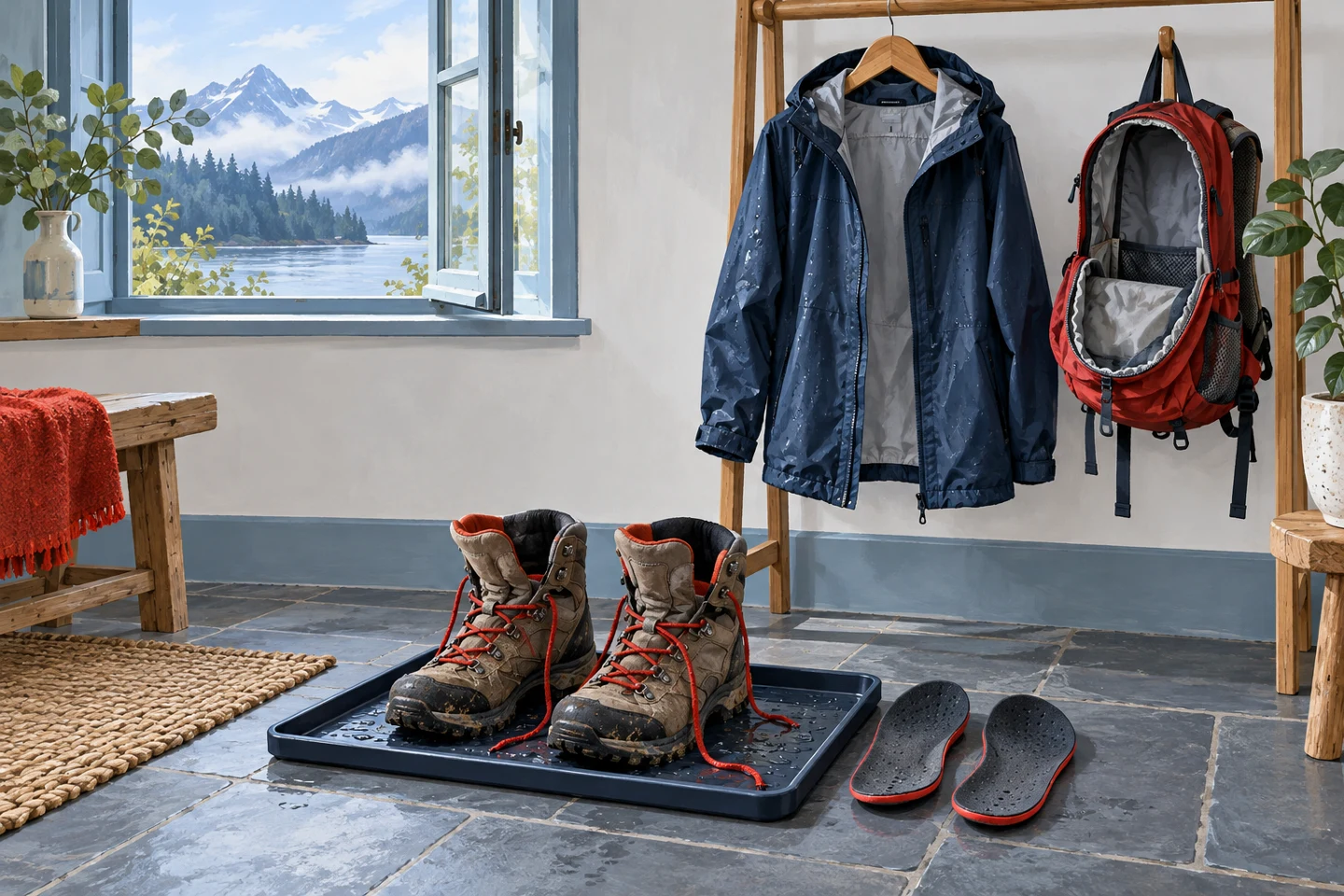
Consult the shoe model's care guidance first. For the relevant models, LOWA describes removing insoles and drying in a well-ventilated room away from heat sources. That is a specific manufacturer's instruction; check other footwear against its own guidance.
Arrange left and right components so their matching insoles can be identified later. Separate positions help more than one heap when two people have similar shoes. A washable tray can contain dirt without requiring the footwear to sit inside a closed container.
Care products are model-specific too. A treatment recommended for particular leather is not a universal method for synthetic uppers, every sole, or all linings. Establish the instructions rather than applying several products in succession as a precaution.
Attend to the jacket and its label
Hang or lay out the rain jacket as its instructions require. Check pockets before leaving tickets or small items inside. A wet hem, folded hood, and pocket lining may dry differently from an exposed front panel. Examine the complete garment rather than only its most accessible surface.
GORE-TEX's care information explicitly refers to the garment manufacturer's instructions too. A particular washing or drying method may be appropriate for one product, while specialised constructions have separate guidance. A generic internet rule for rain jackets cannot replace the label.
After-treatment also needs an appropriate reason and method. Finishing a rainy outing does not automatically mean every object needs renewed water-repellent treatment. If a function appears to have changed, consult the relevant care and service information.
Inspect before returning equipment to storage
Choose a dry, suitable storage position and leave space between the objects while drying. A tight stack with a wet blanket lying on a backpack does not address the task. If room is limited, reposition items in stages; the essential step is checking their condition before storing them.
Finally inspect seams, zips, buckles, and noticeable damage. Return small removable components to their intended positions. A problem requiring repair or clarification from the manufacturer should be recorded visibly, rather than rediscovered only when packing next time.
Reassemble the complete day kit only when individual objects have been cared for as instructed and are dry. Replace used supplies and keep empty containers clean and ready. The next outing then begins with usable equipment rather than the unchecked assumption that everything was put back in the bag last time.
Sources & current information
Opening hours, connections and conditions can change. Consult official sources before travelling and follow local notices.