Connect the places with a question
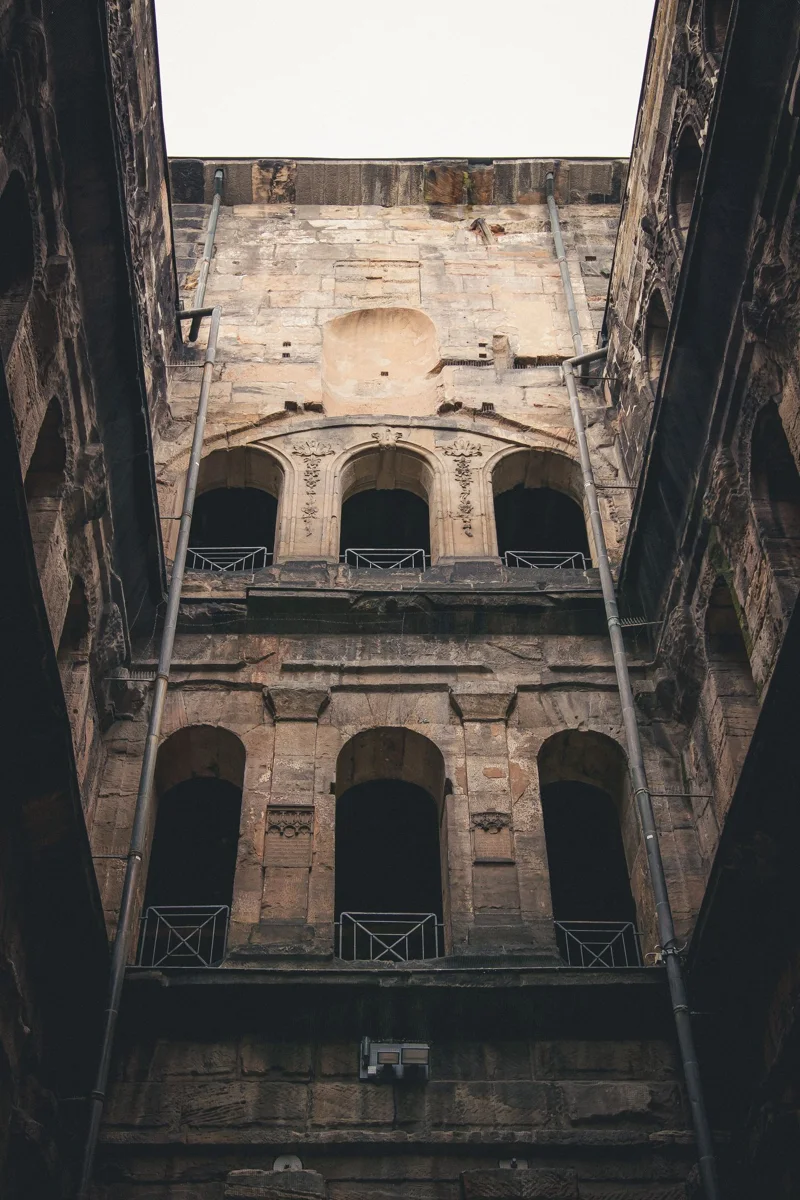
Trier can fill a day with Roman names. For a first shared visit, use a smaller question: how do a city gate and a large building complex differ in their spatial effect? Porta Nigra and the Imperial Baths are possible focal sites. The official visitor office lists them alongside the basilica and amphitheatre as different Roman monuments. That supplies a choice rather than an obligation to complete all four.
An archaeological site asks for different attention from an interior appearing largely complete. Do not expect the same presentation everywhere. Decide whether you mainly want to observe forms or have historical connections explained. For the latter, a current guided visit may be more useful than several brief admissions without a connecting idea.
Choose the Porta Nigra as a start or a focus
Porta Nigra supplies a clearly named meeting and orientation point. It need not also become the start of every subsequent journey. Examine the plan for the sites actually under consideration. A sequence of separate ancient monuments is not a small circuit around one square. Check their positions before choosing the order rather than relying on the attraction list.
For an interior visit, check current access and visitor arrangements. Seeing the exterior is also an experience, but it is not equivalent when moving through the building is the real interest. State that expectation before the day becomes a succession of compromises satisfying neither person. Agree which site deserves the greater share of time.
Approach ruins differently
At the Imperial Baths, consider the spatial arrangement: what proportions become apparent, where are visitors directed and which parts need interpretation to become intelligible? Remain on approved visitor routes. A ruin is not a setting for improvised shortcuts or entering structurally uncertain areas. Let signs determine access rather than what looks climbable or photogenic.
Use official interpretation instead of assigning a specific historical function to visible masonry yourself. A plan can help identify your position. Remembering every detail afterwards is unnecessary. Comparing the space with the gate seen earlier may already provide a shared subject for two travellers. Different observations can complement one another without a single correct reaction.
If reading and reconstruction become tiring, taking a break is not wasted admission. Do not judge departure solely by the number of panels remaining. Consider whether the principal spatial idea has become clear and give the following town walk time. Attention has limits even where the subject remains interesting.
A present-day city remains between the monuments
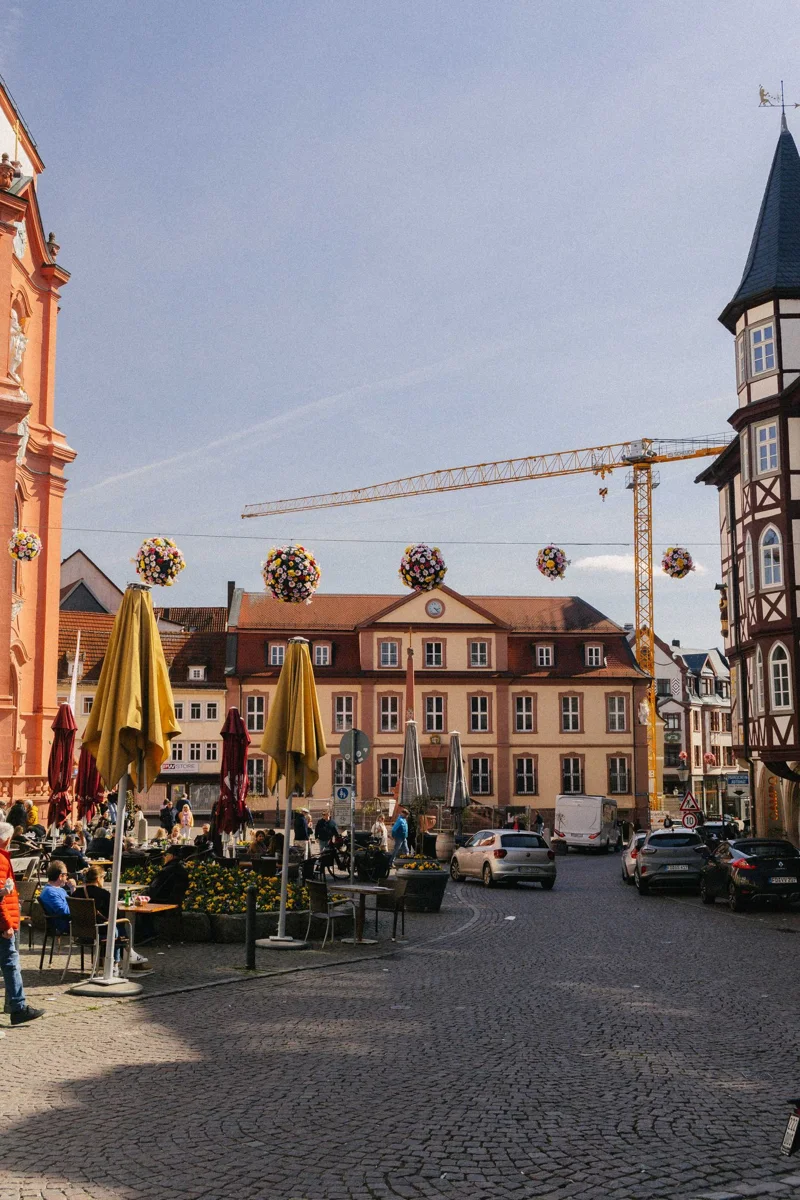
Include a meal or an ordinary street section between the historic priorities. Trier consists of more than separate monuments. A present-day square or shopping street changes the scale again without adding a third major visit. Allow this change to become part of the day instead of rushing through it as empty transport time.
Check departure from the final stop. If another ancient site would fit only as a rushed remainder, leave it as a reason to return. A smaller choice organised around a question often gives a more interesting shared memory than completing a list. Keep the final optional stretch easy to remove if either person needs longer at the principal site.
Sources & current information
Opening hours, connections and conditions can change. Consult official sources before travelling and follow local notices.