Do not use the town up as a preliminary stop
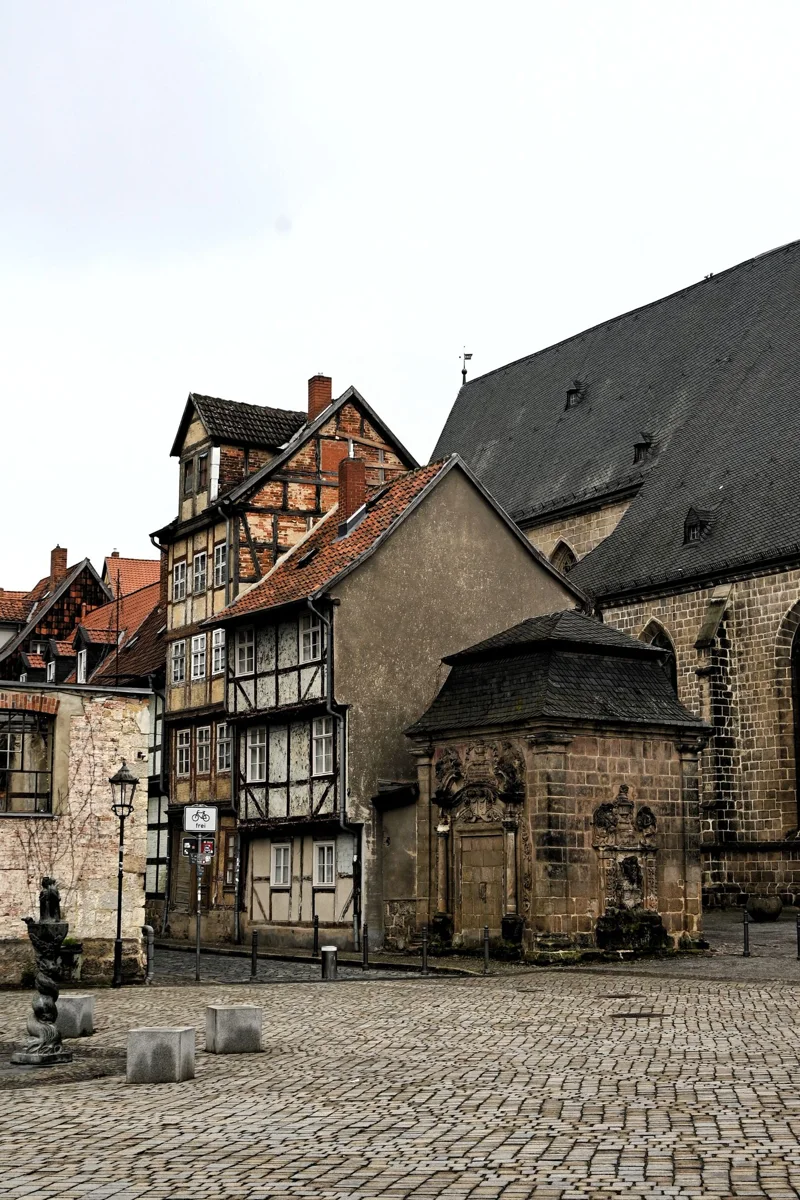
Quedlinburg works as an urban destination without immediately continuing to as much of the Harz as possible. The visitor office connects its heritage status with the historic townscape, collegiate church and buildings on the castle hill. This suggests two perspectives: street spaces below and a chosen section around the hill. There is no need to turn that into counting every building.
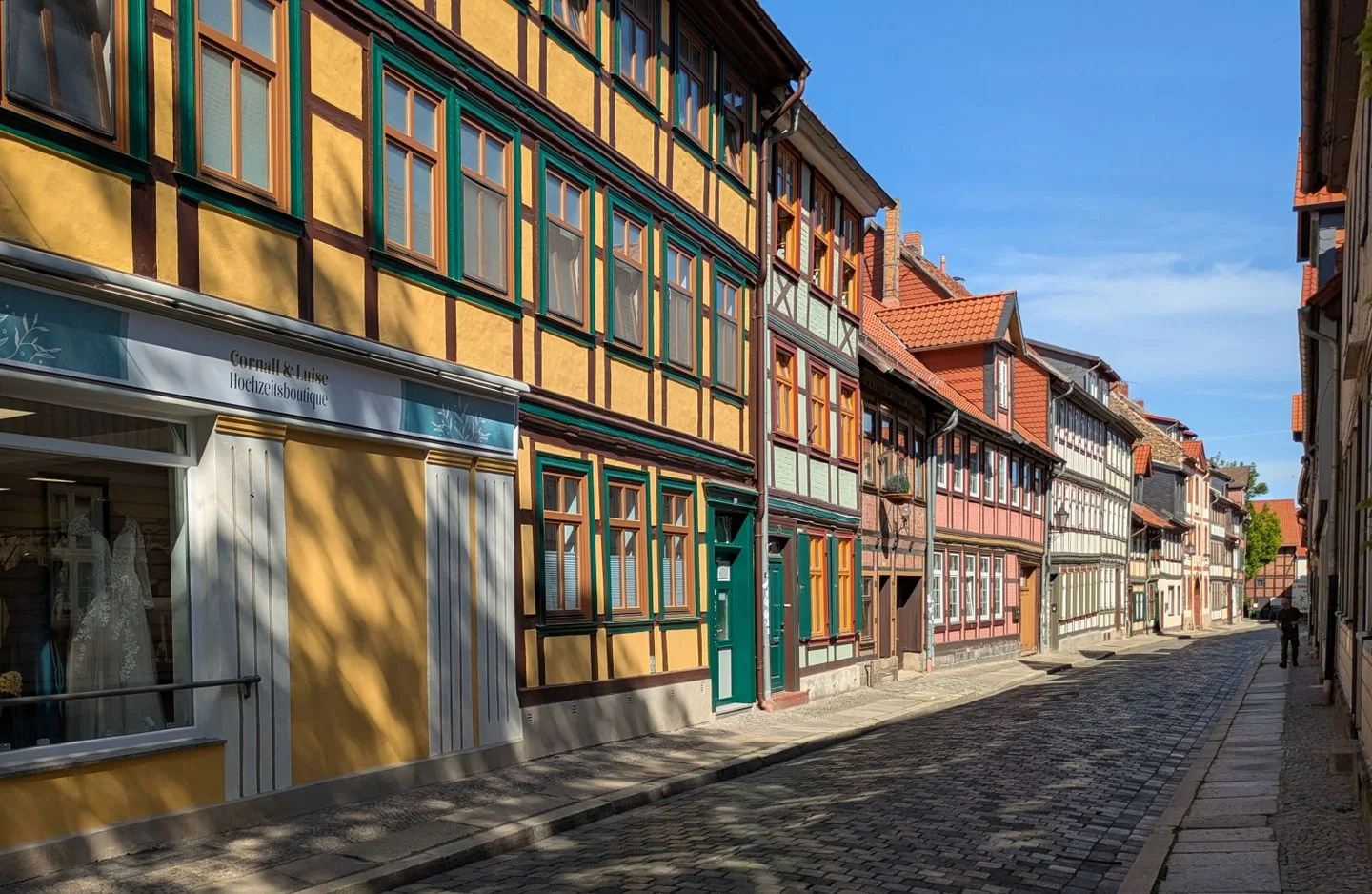
First explore a connected part of the old town. Notice how half-timbered façades, street width and small openings work together. Photographing an isolated house before moving on differs from observing the whole street. Agree on an amount of photographic time both people find comfortable. The other traveller need not wait at every individual façade.
For an interior on the castle hill, check current access and exhibitions with the responsible operator. Naming the area does not establish which parts are open. The route up and back also requires time. Avoid treating admission as a tiny addition immediately before the journey home, especially when neither person has considered the return route.
Mark Markt, Finkenherd and Schlossberg on the town map. Finkenherd gives the transition towards the castle hill a specific name, and the Quedlinburg information service also has a point there. For an outdoor town wander, go from the market through the southern old-town area to this point, then choose another street back. For a planned indoor visit, the hill instead becomes the main destination of your next section.
This distinction helps when the two of you have different walking preferences. Someone who wants longer with the façades below need not assume that the entire upper visit will still fit just as comfortably afterwards. Make a conscious decision at Finkenherd: continue to the selected visit, pause or return into town. The change in height belongs to the plan rather than disappearing between two attraction names.
Keep the unplanned time within the old town
A shared meal can connect the sections of the visit. Do not automatically spend it trying to recover every omitted attraction on your phone. Decide whether another street would appeal or whether to linger at a square already seen. Covering less new ground can create more opportunity to notice the surroundings.
Ordinary boundaries continue in an inhabited historic centre: private doors, closed entrances and space used by other people. A half-timbered photograph does not justify looking behind every gate. Use publicly accessible areas and let individual houses remain part of a broader setting rather than treating them as isolated exhibits.
For another day, choose either a deeper town visit or a separately planned excursion. Avoid compressing both into the remainder of an already short stay. Quedlinburg need not be a hurried start to another journey. An open ending in the old town can complete the shared city visit, with any wider exploration kept as a deliberate choice.
Sources & current information
Opening hours, connections and conditions can change. Consult official sources before travelling and follow local notices.