Notice the change in level before setting out
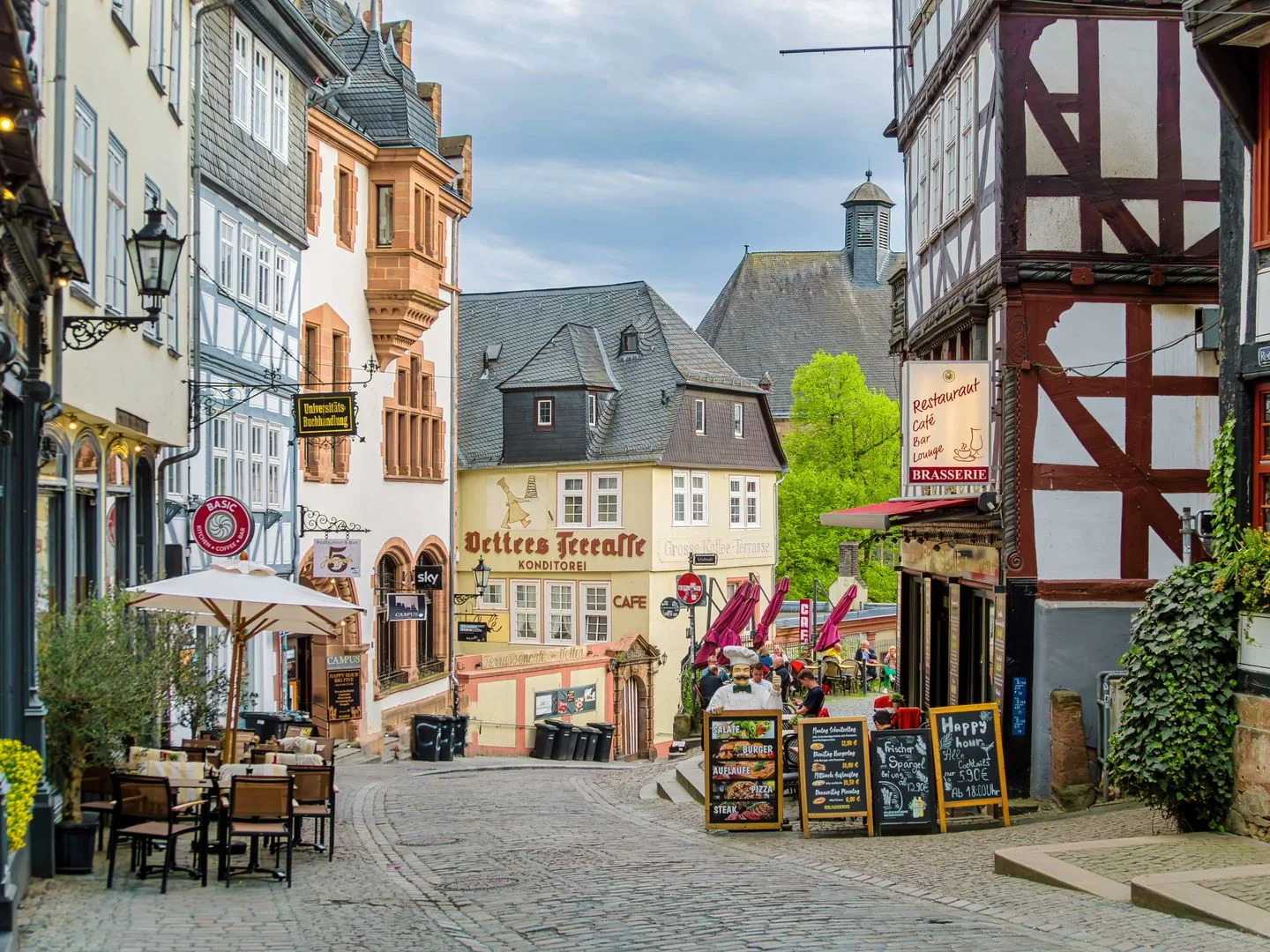
Marburg's upper town is not simply a flat old-town stroll with a few incidental steps. Visitor information describes the climb from valley to castle and identifies lifts at Pilgrimstein towards the market square. Examine these options on a current map beforehand. A lift does not automatically replace every further uphill section.
Mark three places as an initial framework: Elisabethkirche in the valley, the upper-town market and the Landgrave's Castle farther up. The decision concerns which to connect. For a shorter day or less walking, the market can remain the principal destination. This is a deliberate selection rather than an unsuccessful castle visit. Let both travellers take part in the choice.
Check the lifts as a specific connection
For assistance reaching the upper town, check current operation, entrances and the routes continuing afterwards. Do not rely solely on the general statement that Marburg has lifts. Particular mobility needs require details of the actual route, including surfaces, remaining distance and return. Local contacts can provide more useful detail than a picturesque city image. One accessible stage does not resolve the entire outing.
Spend genuine time at the market. A pause can complete the change in level before you decide on more walking. One person can examine a nearby street while the other remains at the agreed place. A recognisable meeting point works better than repeated waiting beside each staircase. The pause becomes part of the shared visit rather than an obstacle to completing it.
Make the castle a second decision
If continuing towards the castle, check the appropriate public route and any desired visitor offering. Reaching the exterior area and spending longer in a museum are different programmes. Do not let the single word castle silently stand for both. Decide which experience matters before allowing the route to expand.
With reserved admission, account for the journey from the market to the actual entrance. Do not let a meal run accidentally until just before it. Without an appointment, keep the sequence more flexible. Both people should nevertheless know whether another higher section lies ahead or the unhurried final part has begun. A clear expectation is more useful than repeated suggestions of one more view.
Include the way down in the choice
Going down also involves a real route. Plan it from the final stop and include possible luggage collection. Another viewpoint should not consume the entire remaining margin. Check practical stages before extending the walk.
Marburg works well for two people when height and pauses are considered together. The question is not how many steps can be managed but which urban perspectives the chosen route connects. Valley, market and perhaps castle can receive different weights. A clearly described shorter route may reveal the town more strongly than an exhausting complete climb. The appropriate extent follows the people travelling rather than an assumed ideal itinerary.
Sources & current information
Opening hours, connections and conditions can change. Consult official sources before travelling and follow local notices.