Distinguish a castle view from a castle visit
Heidelberg can be visited with a view towards the castle or by actually spending time there. Both can work, but they are not identical. A shared day becomes clearer when you discuss that difference early. Someone expecting the castle as an image above town plans differently from a traveller wanting the courtyard, grounds or a particular interior offering.
For a visit, castle management provides specific arrival information and recommends the funicular. Check current details, including local changes. A general map point labelled castle is not a precise arrival location. Going up also needs to fit the intended entrance and later return. Avoid assuming all parts of the site share one access point.
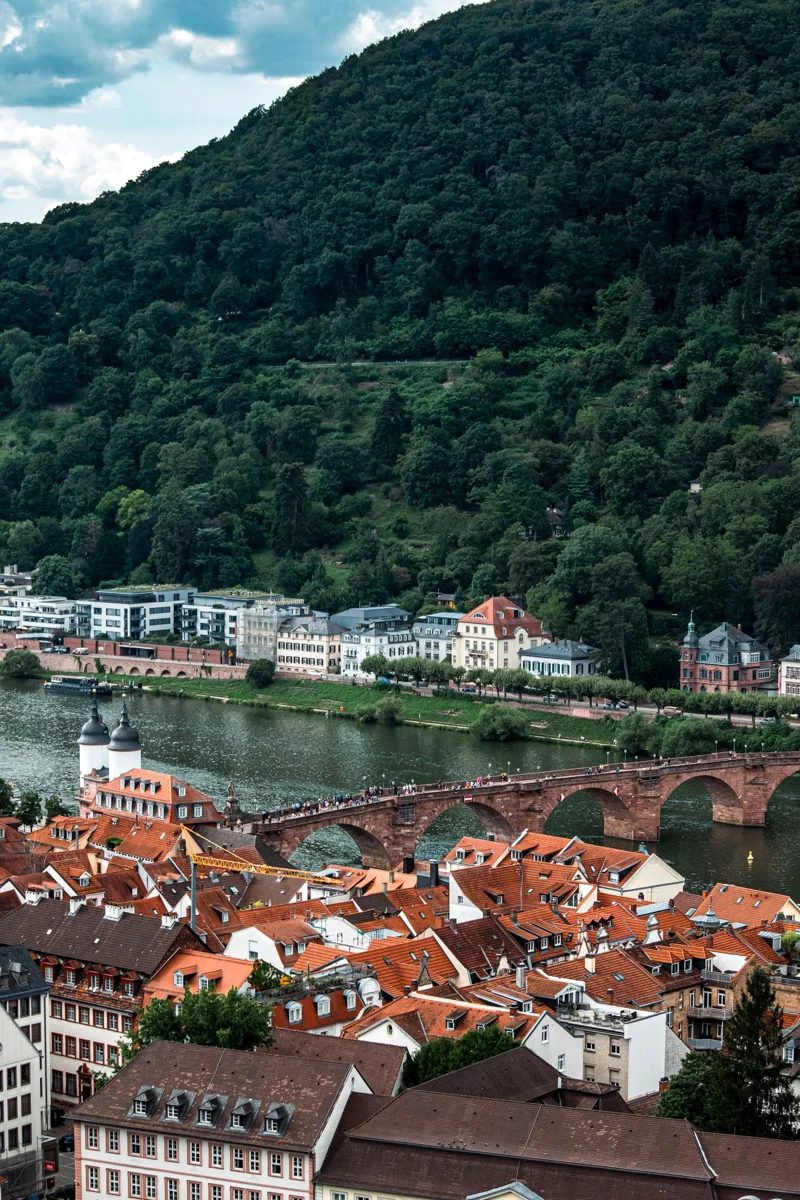
Look at the Old Bridge from more than one position
Official city information presents the Old Bridge as a place for views towards the castle and old town. Allow time for the crossing and surroundings. On the bridge, you remain within other people's movement space; a suitable public place beside it is often better for extended conversation or reviewing photographs.
Changing Neckar banks can provide another perspective without requiring a further substantial uphill walk. Keep the chosen shape of the day in mind. If the castle supplies the major change in level and setting, the remaining period can stay closer to the river and old town. One change need not generate another automatically.
Build margin into arrival
For a booked castle offering, do not place an untested meal or lengthy town walk immediately beforehand. Include reaching transport, possible waiting and the section to the actual meeting point. The map distance between old town and castle explains only part of that sequence. A reservation concerns an entrance time, not simply being somewhere nearby.
Where mobility needs differ, ask about the specific options for your visit. Avoid general conclusions about the whole site's suitability. One transport connection or accessible building section does not resolve every route question. The operator's access information provides the relevant basis. Discuss what actually matters to both travellers before choosing the arrangement.
Without fixed admission, the sequence can remain more flexible. A shared time for deciding about the castle is still useful. Do not postpone it until a long break has begun and the remaining day is tight. A clear decision saves more negotiation than repeated suggestions that it might happen later.
Spend time in the old town rather than only crossing it
Before or after the castle, retain a street section and pause of their own. Several additional admissions are unnecessary. A meal beside an active street can show the town differently from a view above it. These are separate experiences rather than a principal attraction and the leftover time around it.
Finally, check the actual departure route, especially where luggage must be collected. Another bridge photograph should not consume the margin. For two travellers, Heidelberg benefits from a deliberate change between closeness and distance: street, river and perhaps castle. Let the sequence support those perspectives instead of becoming a continuous rush between familiar images. Leave one optional final section that can be omitted calmly.
Sources & current information
Opening hours, connections and conditions can change. Consult official sources before travelling and follow local notices.